Midea - Experts & Thought Leaders








Latest Midea news & announcements

Saudi Arabia’s construction sector continues to expand at an unprecedented pace, with more than $400 billion worth of projects in the pipeline under Vision 2030. Against this backdrop, the 2nd MEP International Conference (MEPIC 2025) will take place on 10–11 September 2025 at JW Marriott Riyadh, in Riyadh, KSA, bringing together regional and international stakeholders to discuss the evolving role of mechanical, electrical, and plumbing (MEP) systems in shaping the Kingdom’s future built environment. Maintenance of MEP systems The conference will convene over 250 senior professionals, including project owners, developers, architects The conference will convene over 250 senior professionals, including project owners, developers, architects, engineers, and contractors. Discussions will focus on how smart building technologies, sustainable practices, and automation are redefining the design, implementation, and maintenance of MEP systems across giga- and mega-projects, such as NEOM, Red Sea Global, Diriyah Gate, King Salman Park, and Qiddiya. Key Topics on the Agenda Advancing energy-efficient MEP solutions for high-performing buildings Integration of smart controls with next-generation HVAC systems Modular and prefabricated MEP systems in modern construction Building codes, sustainability certifications, and compliance The role of BIM and digital engineering in transforming MEP practices Fire protection, safety systems, and green MEP innovations Advanced systems and technologies for the built environment The two-day program will feature eight panel discussions, keynote sessions, and an exhibition of 25+ solution providers The two-day program will feature eight panel discussions, keynote sessions, and an exhibition of 25+ solution providers, including WSP, KEO, Dar Al Riyadh, SEPCO, El Seif, and pioneering facility managers showcasing advanced systems and technologies for the built environment. “MEPIC 2025 will serve as a platform for government agencies, developers, consultants, and solution providers to align on strategies that will accelerate Saudi Arabia’s journey toward sustainable and intelligent infrastructure,” said Leila Masinaei, Managing Partner – The Great Minds Group. Leila Masinaei adds, “The conference will highlight innovations in MEP systems that not only improve efficiency, but also ensure the Kingdom meets its ambitious sustainability targets.” Sponsors & Partners The conference is supported by pioneering global and regional players, including Midea, Akel, Daikin, GF Piping Systems, Mekar, Climatech, Victaulic, Rheem, General, Alwasail, Evapco, NAFFCO, ASHRAE Saudi Arabia Chapter, Alessawi, Gulf O Flex, Armstrong, and Tyne Gulf. Opportunities Business Growth: With the Saudi Arabian MEP services market projected to nearly double to USD 27.5 billion by 2030, the conference offers unmatched opportunities for solution providers to capture market share. Sustainability Leadership: Demand for smart and green MEP systems is expected to reduce energy consumption by up to 40% in new developments, aligning with Vision 2030’s environmental goals. Strategic Partnerships: Previous editions of MEPIC facilitated collaboration between 200+ senior decision-makers and 20+ solution providers, and MEPIC 2025 will build on this momentum to forge stronger government–industry alliances. Innovation Showcase: From modular and prefabricated systems to advanced fire safety and smart HVAC, MEPIC provides a stage for global and regional innovators to present cutting-edge solutions to decision-makers.

On June 12, Stephen Yurek, President of the Air Conditioning, Heating, and Refrigeration Institute (AHRI), alongside the AHRI management team, visited Midea Air Conditioning Headquarters. The delegation shared AHRI’s global organizational structure and mission, discussing future collaboration with Midea to advance regional energy efficiency standards and streamline regulatory pathways for market access across global regions. AHRI also recognized Midea for achieving 100% compliance in AHRI’s three consecutive years of certification testing in VMAC, PTHP, PTAC and other categories. Midea attendees included Louis Zhao, President of the Residential Air Conditioning Division; Vincent Chou, Vice President of the Residential Air Conditioning Division; and Dennis Lee, Vice President of Midea Building Technologies Division International Business. AHRI’s recognition of Midea’s leadership The meeting with AHRI leadership represents a pivotal step toward co-developing global standards The meeting with AHRI leadership represents a pivotal step toward co-developing global standards and advancing international collaboration in high-performance HVAC solutions. With over 330 member companies in North America alone, AHRI standards cover 95% of HVACR products in the region. With its global service framework expansion, it establishes localized efficiency standards and market access rules, ensuring high-efficiency products enter markets smoothly. Choosing Midea as the first stop of its China visit reflects AHRI’s recognition of Midea’s leadership in driving energy efficiency upgrades and standard development globally. Exploring collaboration frameworks During the closed-door meeting, both parties explored collaboration frameworks for three market types: Developing Markets: Accelerate electrification and inverter technology adoption through high-efficiency solutions Extreme-Climate Markets: Jointly develop practical efficiency and quality standards based on local usage insights Markets Without Unified Standards: Build foundational regulatory systems to foster healthy competition The discussions focused on leveraging AHRI’s expanding footprint (including new Singapore/Dubai offices) to accelerate regulatory harmonization. This alignment ensures Midea’s advanced systems qualify for key incentive programs like federal/regional heat pump rebates tied to high-efficiency standards. pioneering heat pump innovation Stephen Yurek outlined AHRI’s global structure, highlighting offices in the U.S., China, India, UAE, and Mexico. He praised Midea’s heat pumps delivering up to 100% heating output at -31°F and up to 100% cooling output at 140°F, expressing interest in deeper global collaboration. “Midea commits to pioneering heat pump innovation for unprecedented efficiency and environmental adaptability, while tailoring localized solutions to meet global efficiency regulations”, said Louis Zhao, President of Midea’s Residential Air Conditioning Division. “We’re honored to support AHRI’s worldwide strategy by combining our technical expertise with market experiences.” Elevating the partnership AHRI’s visit elevates the strategic partnership between both parties to new heights AHRI’s visit elevates the strategic partnership between both parties to new heights. For over a decade, the two organizations have been trusted allies in advocating for high-efficiency, low-carbon transformation. Since 2017, Midea has collaborated with AHRI to actively participate in developing standards for multiple projects, including high-efficiency low-temperature heating, eco-friendly refrigerants, and CVP, jointly advancing industry energy efficiency models using the new R454B eco-friendly refrigerant. Active involvement from Midea Midea also actively participates in key leadership and technical forums, including standing committees on Certification and Global Services and a broad range of working groups. This active involvement culminated in a major landmark: Midea became the first Chinese brand admitted into AHRI’s Central Ducted Systems Unitary Section Leadership Council. Leveraging AHRI’s influential global platform and standards expertise alongside Midea’s technological innovation capabilities and market insights, this collaboration will create greater value for global users and inject strong momentum into sustainable industry development.

As demand for high-efficiency, electrified heating solutions grows in North America, Midea continues to lead innovation in heat pump technology and is focusing on making these solutions more accessible and easier to adopt. Midea continues to demonstrate its global leadership in HVAC innovation and left a lasting impression at AHR Expo 2025 by hosting an inspiring panel on 'Heat Pump Trends & Commercialization'. Midea also received Intertek's first Global CVP Compliance Certificate for Air Conditioners. Heat Pump Trends & Commercialization Panel On the first day of the show, Midea hosted industry leaders from Intertek, ESCO Group and Resource Innovations in a compelling panel discussion of heat pump trends and the issues and opportunities for commercialization. The panel explored the future of heat pump adoption and regulatory challenges The panel explored the future of heat pump adoption and regulatory challenges and underscored the growing role of policy, incentives and industry collaboration in scaling heat pump adoption. Held in front of a full audience of contractors, distributors and media, the panel reinforced Midea’s commitment to playing a leadership role in the industry and making high-performance systems accessible and practical for contractors and homeowners alike. Midea’s EVOX All Climate Heat Pump After participating with Intertek in the panel discussion about heat pump commercialization requirements, Midea was honored with Intertek’s first Global CVP Compliance Certificate for Air Conditioners. Midea’s EVOX All Climate Heat Pump is considered one of the best heat pumps in the industry, setting new benchmarks in extreme climate performance and ease of installation. As a result, Phil Huang, head of Midea RAC North America, accepted the Intertek award on Midea’s behalf, stating, “This recognition reflects our dedication to innovation and our mission to make energy-efficient technology accessible to all.” AHR Expo Highlights: Showcasing Cutting-Edge HVAC Solutions Midea’s booth at AHR Expo 2025 featured the brand’s latest heat pump innovations, focusing on energy efficiency, reliability and ease of installation. Midea’s heat pump solutions serve a wide range of applications - from the Packaged Window Heat Pump (PWHP), designed for multi-family buildings and urban retrofits, to the Heat Pump Water Heater (HPWH), an energy-efficient alternative for residential water heating. These solutions are built to enhance performance in a variety of climates while reducing energy costs for homeowners and businesses alike. Attendees were introduced to a variety of advanced solutions: EVOX All Climate Heat Pump system: Engineered for all climates, this system features Enhanced Vapor Injection (EVI) technology, delivering up to 100% heating output at -31°F/-35°C and continuous operation down to -40°F/-40°C and up to 100% cooling output at 140°F/60°C and continuous operation up to 149°F/65°C. The complementary modular Midea EVOX G3 block-n-lock air handler unit (AHU) is designed with contractors and customers in mind with simplified installation, and a SEER2 rating of up to 19, delivering year-round energy savings. Heat Pump Water Heater (HPWH): Adopting inverter technology and source air to produce domestic hot water is a major key to increased energy efficiency, and with a 400% efficiency rating, the Midea HPWH can save homeowners up to 75% on energy costs. It provides up to 91 gallons of hot water in the first hour, operates quietly (45 dBA), and is eligible for most U.S. and Canadian rebate programs (rebates vary depending on state/region). Packaged Window Heat Pump (PWHP): Ideal for multi-family and multi-zone buildings, the Midea PWHP offers compact, efficient heating and cooling. It provides 100% heating at 5°F, operates at temperatures as low as -13°F. It is also a key part of New York State’s Clean Heat for All Challenge and the State’s decarbonization and energy efficiency targets and goal of making modern heat pump technology more accessible – one of Midea’s core missions. Multi-Zone Systems: Offering flexible heating and cooling for up to six zones, these heat pump systems include great options including the IN One-Way Cassette and All Easy Pro high wall split. These units are ideal for homes where temperature control in individual rooms is desired. They achieve SEER2 ratings of up to 25 and operate efficiently across a wide temperature range (-22°F to 122°F). Midea’s innovations reflect a customer-first approach, ensuring that homeowners and contractors have access to solutions that simplify installation while delivering long-term energy savings. Each showcased product, from central ducted heat pumps to compact multi-zone systems, was designed with efficiency, adaptability and user convenience in mind. AHR Expo Workforce Development Panel David Rames delivered a compelling presentation on 'Revolutionizing HVAC: The EVOX G3 Heat Pump System' On the second day of the Expo, David Rames delivered a compelling presentation on 'Revolutionizing HVAC: The EVOX G3 Heat Pump System'. He detailed the product’s superior performance, energy efficiency and contractor-friendly features. Rames emphasized how the EVOX G3 system simplifies installations while providing reliable heating in any climate and helping homeowners reduce their energy consumption and operational costs. The talk also underscored the importance of collaboration between manufacturers, regulators and industry leaders to drive mainstream heat pump adoption. As one of the key contributors, Midea shared insights on balancing product innovation with evolving market demands and policy incentives. Educational Programming: Empowering the HVAC Workforce Midea also reinforced its commitment to education and workforce development at the AHR Expo. This year, Midea hosted numerous training sessions and discussed its collaboration with numerous trade schools across North America and efforts in providing both contractors and students with hands-on experience in advanced heat pump technology. As part of this initiative, Midea has donated HVAC units and other equipment to Orange Technical College in Orlando to support hands-on training for its trade students. This donation underscores Midea’s dedication to fostering talent and building the future of the industry. Workforce Development Panel On the final day of the show, Midea hosted local trade school students for a tour of the booth On the final day of the show, Midea hosted local trade school students for a tour of the booth. David Rames also participated on the AHR Expo-hosted Workforce Development Panel, where he and other industry leaders discussed the importance of preparing the next generation of HVAC professionals. Beyond the classroom, Midea continues to partner with contractors, influencers and media outlets to expand industry knowledge, raise awareness of the benefits of today’s innovative heat pump technology, and foster greater adoption of energy-efficient HVAC solutions. Midea is committed to strengthening the HVAC workforce by investing in hands-on education and technical training. These initiatives help bridge the skills gap, ensuring that the next generation of professionals is equipped to install and maintain advanced heat pump systems. Consumer-Focused Benefits: Making Energy Efficiency Accessible Midea is committed to making energy-efficient solutions accessible to more homeowners and participated in numerous meetings with key stakeholders, including the Consortium for Energy Efficiency, utilities and other leading organizations committed to the commercialization of advanced heat pump technologies. Midea continues to drive its product designs to help reduce energy bills and provide reliable performance in all climates. In addition, the company continues to work with utilities and municipalities to help ensure that consumers who purchase their products can be eligible for regional and federal incentives like the Inflation Reduction Act and Canada’s Greener Homes Grant. Looking Ahead: Midea’s Vision for HVAC Innovation Midea’s success at AHR Expo 2025 reflects its dedication to advancing energy-efficient HVAC solutions Midea’s success at AHR Expo 2025 reflects its dedication to advancing energy-efficient HVAC solutions and supporting its stakeholders’ decarbonization goals. As the company’s engineering team in Louisville, Kentucky continues to invest in R&D, Midea remains focused on developing technologies that integrate seamlessly into everyday life, from smart connectivity features to solutions that enhance comfort and reduce energy consumption. Midea committed to workforce development Beyond product innovation, Midea is committed to workforce development and industry education, partnering with trade schools across the country to promote heat pump applications. The company plans to expand these efforts through collaboration with industry institutions, utilities, contractors and educational programs to raise awareness, provide installation training and equip professionals and consumers with the knowledge to adopt high-efficiency heating and cooling solutions. As Midea looks ahead, the company remains dedicated to developing breakthrough technologies, expanding workforce training initiatives and driving consumer education - ensuring that heat pump adoption continues to grow across North America.
Insights & Opinions from thought leaders at Midea

The HVAC market is in transition. Heat pumps are no longer niche, but are becoming the default replacement for both furnaces and central AC. Midea is responding to the new normal and pledges to be a partner in the transition by equipping the trade with future-ready solutions and accessible training. “For contractors, this shift presents a major opportunity,” says David Rames, Senior Product Manager, Midea. Midea’s EVOX All Climate Heat Pump Midea helps dealers deliver more jobs with fewer SKUs (simplified inventory) and fewer callbacks Midea is well-known to consumers, and recognition is growing among the professional space in the United States. Midea approaches the professional market with a contractor-first strategy, designing systems in their research and development (R&D) labs in Louisville, Kentucky, for fast installation, retrofit compatibility, and rebate eligibility. Midea helps dealers deliver more jobs with fewer SKUs (simplified inventory) and fewer callbacks. Midea’s EVOX All Climate Heat Pump and air handling unit (AHU) offer versatility, modular designs, dual-voltage compatibility, and all-weather performance. The features allow contractors to future-proof their businesses and offer customers cost-effective options across new construction and retrofit applications. Midea's expanding distribution partnerships Midea is expanding distribution partnerships, opening showrooms, and investing in training to ensure HVAC professionals have the tools and support they need. For distributors, the growing demand underscores the importance of training, stocking flexible systems, and guiding customers through rebate processes. Midea’s growing showroom network in the United States and Canada doubles as live training hubs. Locations in New York City, Orlando, Mississauga, Montreal, and Vancouver give contractors hands-on experience with systems like the EVOX G3 ducted system and Packaged Window Heat Pump (PWHP). Real-world equipment training Each training facility hosts technical demos, installations, and education on rebate programs Each training facility hosts technical demos, installation walkthroughs, and education on rebate programs. These centers also partner with trade schools and utilities, helping bridge the skills gap with real-world equipment training. “By combining distribution, product demos and workforce education under one roof, Midea differentiates itself from competitors and ensures contractors are confident installing our whole home systems in single and multi-family projects and public housing retrofits,” says David Rames. Midea’s Growth of heat pumps Midea’s buildup comes amidst noticeable growth of heat pumps versus traditional air conditioners in 2025 and beyond. Industry data shows a structural market shift: AHRI reported a 19% year-over-year increase in heat pump shipments in April 2025, while central AC sales declined 2.8%. This growth is fueled by incentives, evolving building codes, and consumer demand for year-round solutions. Retrofit-ready designs Midea supports this transition with retrofit-ready designs, modular AHUs, and dual-voltage options “At Midea, we see strong adoption of ducted EVOX systems and PWHPs across residential and multi-family housing,” says David Rames. Midea supports this transition with retrofit-ready designs, modular AHUs, dual-voltage options, and training programs that help installers capture opportunity as AC-only demand continues to shrink, he adds. Enhanced Vapor Injection technology And the innovation continues. The forthcoming EVOX All Climate Heat Pump delivers up to 100% heating output at down to -31°F with continuous operation down to -40°F, and up to 100% cooling output at up to 140°F with continuous operation up to 149°F. Enhanced Vapor Injection (EVI) technology maintains reliable capacity where traditional systems fail. The modular “block-n-lock” AHU breaks into three sections for tight-space installs, can be assembled in six different configurations to meet any need and reduce the number of SKUs a contractor needs to stock, supports both 115V and 208/230V, and fits as a direct furnace replacement. new construction and retrofit jobs Electrification policies across the U.S. and Canada are directly shaping HVAC system design With contractor-friendly flair fittings, wireless commissioning, and rebate eligibility, EVOX is engineered for both new construction and retrofit jobs. “This system sets a new benchmark for extreme climate performance and installation flexibility,” says David Rames. Electrification policies across the U.S. and Canada are directly shaping HVAC system design. Performance standards, building codes, and incentive structures dictate cold-climate systems. For Midea, this means designing ducted and packaged solutions that deliver 100% heating output in sub-zero temperatures, qualify for programs like ENERGY STAR Most Efficient and CEE Advanced Tier, and integrate with demand response platforms. Advanced inverter-driven all-weather systems “We have also partnered with agencies on programs such as New York’s Clean Heat for All Challenge, deploying retrofit-ready Packaged Window Heat Pumps at scale,” states David Rames, adding “Policy isn’t just a driver; it’s a roadmap for innovation and deployment.” Looking ahead, Midea is investing in advanced inverter-driven all-weather systems, modular AHUs, and compact packaged solutions that simplify retrofits. The pipeline includes next-generation EVOX models with higher coefficients of performance (COPs) at sub-zero temperatures, grid-responsive controls, wireless communication, and compatibility with smart thermostats. Midea investing in advanced inverter-driven all-weather systems. Contractor training and installation quality The company is also expanding into domestic hot water with a Heat Pump Water Heater (HPWH), which delivers up to 400% efficiency and qualifies for most U.S. and Canadian rebates. Supporting the innovations are hands-on contractor training and ongoing collaboration with utilities and trade schools. Midea is addressing this with modular AHUs, guided commissioning tools, and a nationwide training network “Our goal is clear: To equip the market with scalable, installation-friendly solutions for every climate,” says David Rames. Contractor training and installation quality remain the biggest challenges. Improper sizing, restrictive airflow and misassembled equipment can still undermine performance. Midea is addressing this with modular AHUs, guided commissioning tools, and a nationwide training network. Modern heat pumps Cost is another barrier, but broad rebate eligibility helps homeowners offset upfront expenses. Also, consumer awareness is lagging as many still do not understand that modern heat pumps provide reliable heating in extreme cold in addition to reliable cooling. “Overcoming these hurdles requires contractor education, consumer outreach, and continued investment in easy-to-install, high-performance equipment that reduces callbacks and increases homeowner confidence,” says David Rames. Midea’s forthcoming EVOX All Climate In fact, the misconception persists that heat pumps do not work in cold climates despite modern systems like Midea’s forthcoming EVOX All Climate that deliver up to 100% heating output at down to −31°F and continuous operation down to −40°F. The DOE-tested systems achieved a COP of 1.92 at down to −15°F, outperforming cold-climate benchmarks. However, a Midea-commissioned survey showed that nearly half of homeowners did not know heat pumps can both heat and cool, and only 4% knew that today’s systems can maintain capacity in sub-zero temperatures. “The truth is, inverter-driven, EVI-equipped heat pumps provide year-round comfort more efficiently than conventional systems, and education is critical to correcting outdated perceptions,” concludes David Rames.
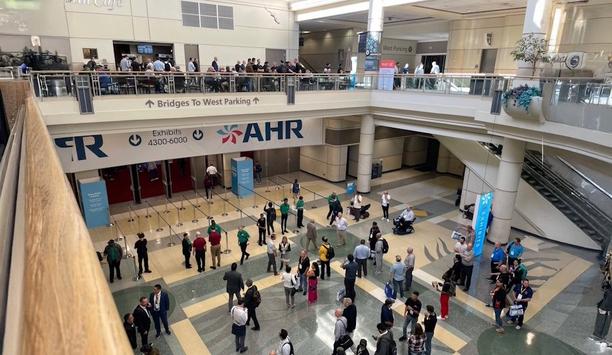
The HVAC Industry gathered in Orlando for AHR Expo 2025, focusing on the latest advancements in technology. Attendees included contractors, manufacturers, engineers, system design professionals, facility managers, architects, wholesalers, and distributors. This year’s expo highlighted game-changing innovations, regulatory shifts, and emerging trends designed to enhance efficiency, sustainability, and connectivity. For HVAC professionals, these developments translate into practical solutions that improve system performance, optimize energy use, and simplify compliance with evolving industry standards. The Next Phase of Refrigerant Transition The transition to A2L refrigerants is a dominant theme at this year’s expo, with major players such as Arkema, Chemours, LG Electronics, Rheem, Daikin, and others showcasing the latest refrigerants and equipment solutions. Following the deadline of Jan. 1, 2025, the shift from R-410A to R-32 and R-454B is well underway, with 80% of manufacturers opting for R-454B. While concerns about flammability persist, experts emphasize that proper training and system design can mitigate risks. LG Electronics' full product line Some OEMs opted for R-454B as an option that is closer to a “drop-in” solution Some OEMs opted for R-454B as an option that is closer to a “drop-in” solution. Daikin was among the manufacturers to go all-in on R-32, which required a complete redesign of product components, ultimately pioneering to more efficient, cost-effective systems, according to the company. LG Electronics' full product line now uses R-32 refrigerant, and they started shipping products in December. All R-410A equipment will be gone by the end of Q1. variety of products on R-454B refrigerant Rheem announced their 100-year anniversary, and a new tagline, "Engineered for Life." They say the trend is toward side-discharge heat pumps, although the industry needs a mix of both. They had a variety of products on display that use R-454B refrigerant. Attendees at AHR Expo 2025 came away with an understanding that refrigerant regulations and selecting compatible equipment will be crucial for ensuring smooth transitions in commercial and residential applications. Intelligent Building Automation and Controls Smart HVAC technology is revolutionizing building control, with AI-driven automation Smart HVAC technology is revolutionizing building management, with AI-driven automation, IoT connectivity, and remote monitoring taking center stage. Companies like Distech Controls and Schneider Electric are introducing IP-based controllers that integrate seamlessly with existing building management systems. Belimo’s intelligent butterfly valve and Delta’s Node-RED Programming with built-in Python support, among other products, are making automation more powerful and user-friendly. Copeland’s Sensi Touch 2 smart thermostat Copeland’s Sensi Touch 2 smart thermostat and Sensi equipment interface module (EIM) can eliminate the need to pull additional wires during installation. The system is weatherproof, indoor, or outdoor, and communicates using radio frequency (RF). AHR Expo 2025 made a strong case that investing in smart controls will improve operational efficiency, reduce downtime, and enable predictive maintenance. Hydronic Systems for Data Center Cooling One major player is Bell & Gossett/Xylem, whose hydronic cooling systems target data center market The rise of data center cooling solutions was another recurring theme at AHR. One prominent player is Bell & Gossett/Xylem, whose hydronic cooling systems target the data center market. The company’s e-1531X and e-1532X smart pumps offer enhanced energy efficiency and a larger "efficiency island." These systems are designed to meet the growing demand for sustainable data center cooling, providing a net-zero roadmap. As data center energy consumption rises, hydronic solutions offer a scalable, efficient approach to thermal management. Heat Pumps Expand Capabilities and Market Reach Heat pumps continue to dominate as a top energy-efficient alternative for commercial and residential applications. Companies such as Danfoss, Mitsubishi, and Samsung are pushing the boundaries with heat pumps that operate in extreme temperatures. Danfoss is progressing forward related to four application areas at AHR 2025--heat pumps, data centers, RTU/DOAS, and retail/refrigeration. Emphasis is on lower emissions and better energy efficiency. Midea drew a lot of attention at AHR 2025, including modular air handler Midea drew a lot of attention at AHR 2025, including their modular air handler – the EVOX G³ – that breaks down into three pieces for easy movement and installation in any of six configurations. They are also opening showrooms throughout the country so consumers and contractors can see and touch the products. Integration with renewable energy sources Johnson Controls-Hitachi mini-splits have a self-cleaning feature called FrostWash Johnson Controls-Hitachi Air Conditioning’s Hitachi mini-splits have a self-cleaning feature called "FrostWash;" they intentionally build a frost layer on the coil so the fine particulates can be captured and then melted away, thus avoiding mold and other contaminants. It can be used in lieu of UV light, which damages plastics. The heat pump market is growing rapidly, and advancements in low-temperature performance and integration with renewable energy sources will drive adoption. The Drive Toward Sustainability Sustainability is a recurring theme at the expo, with manufacturers prioritizing energy-efficient equipment, smart automation, and low-GWP refrigerants. Companies like Lennox, and Rheem are launching highly efficient packaged rooftop units and unitary heat pump systems. Grundfos’s distributed pumping technology and Ziehl-Abegg’s ZAcore intelligent control platform further demonstrate the industry's push toward lower energy consumption and minimal environmental impact. Investing in sustainable HVAC technologies Availability is paramount, and they are opening a new factory in Mexico Lennox is serving the "emergency replacement" market for HVAC equipment with their Xion line. Availability is paramount, and they are opening a new factory in Mexico. Telling the "story" of humidification at AHR 2025, Condair has products for any vertical. They say more education and awareness are needed on the value of humidification. As regulations tighten and demand for green building solutions rises, investing in sustainable HVAC technologies will be critical for long-term success. Smarter, Cleaner, and More Efficient AHR Expo 2025 underscores the industry's shift toward smarter, cleaner, and more efficient HVAC solutions. Whether it’s refrigerant transitions, intelligent automation, or advanced heat pump technology, staying ahead of these trends will help HVAC professionals deliver superior performance while meeting regulatory requirements. The innovations showcased in Orlando set the stage for a future where HVAC systems are not only more efficient and environmentally friendly but also easier to manage and integrate into modern buildings.

The U.S. Department of Energy (DoE) Commercial Heat Pump Accelerator program is designed to enhance building efficiency and electrification. Running from 2024 through 2027, the program aims to overcome adoption barriers, promote advanced heat pump technologies, and create sustainable solutions for HVAC professionals. Compared with conventional packaged rooftop units (RTUs) with natural gas heating, heat pump RTUs are estimated to reduce greenhouse gas emissions and energy costs by up to 50%. For those in the HVAC industry, this program is an opportunity to boost operational efficiency, align with emerging sustainability standards, and unlock new business. Transforming Commercial HVAC with Heat Pumps Known for their dual heating and cooling abilities, heat pumps save energy compared to conventional HVAC systems The DoE’s program centers on accelerating the adoption of high-efficiency heat pumps for space conditioning and water heating. By working collaboratively with stakeholders—including manufacturers, utilities, and facility managers—the initiative seeks to integrate energy-efficient solutions into commercial buildings nationwide. Known for their dual heating and cooling capabilities, heat pumps save energy compared to conventional HVAC systems. The Accelerator program prioritizes cutting-edge systems to lower energy consumption and operating costs for businesses. As decarbonization becomes a global priority, electrification of HVAC systems is also key. By reducing reliance on fossil fuels, heat pumps contribute to a cleaner energy future. Practical Benefits for Professionals For HVAC professionals, the program provides a framework to explore new markets and enhance service offerings. With the Accelerator program’s emphasis on efficiency, HVAC professionals can help clients reduce energy bills, providing a tangible ROI for heat pump installations. Participants in the program also gain access to technical guidance, best practices, and case studies, fostering skills to implement heat pumps effectively. As building owners seek energy-efficient solutions, HVAC professionals are positioned as experts in heat pump technology in order to gain a competitive edge. Success of the residential challenge The retail program is a growth of an earlier program related to residential technologies The commercial program is an expansion of an earlier program related to residential technologies. Last fall, the U.S. Department of Energy (DOE) announced that eight manufacturers in the Residential Cold Climate Heat Pump Challenge completed rigorous product field testing to demonstrate energy efficiency and improved performance in cold weather. Bosch, Carrier, Daikin, Johnson Controls, Lennox, Midea, Rheem, and Trane Technologies participated in the residential challenge. Cold climate heat pumps (CCHPs) developed as part of the challenge will soon enter commercial production, manufacturers say. Building upon the success of the residential challenge, DOE is now working with nine heat pump manufacturers to advance rooftop units (RTUs) for commercial buildings through a new technology challenge. Commercial Building Heat Pump Challenge Expanding with the Commercial Building Heat Pump Challenge through its Better Buildings program, DoE is now working with heat pump manufacturers AAON, Addison, Carrier, Daikin, Johnson Controls, Lennox, LG, Rheem, and Trane Technologies to improve the energy efficiency and performance of RTUs in cold weather. The manufacturers will partner with DoE and national laboratories to create prototypes and test product performance and durability. They will then lead field validations with Better Buildings partners, including Amazon, General Motors, Ikea, the Los Angeles Unified School District, Target, Whole Foods, and others. Tackling Challenges in Heat Pump Adoption The DoE program recognizes common challenges HVAC professionals face in promoting commercial heat pump adoption and provides strategic solutions. Cost Barriers: The upfront cost of heat pumps can deter clients. The program encourages collaboration with utilities to offer incentives and financing options, making the transition more affordable. Performance in Cold Climates: Heat pumps have historically underperformed in colder regions. By focusing on technological advancements, the Accelerator addresses performance issues, ensuring systems work efficiently even in extreme weather. Workforce Training: To ensure seamless implementation, the DoE supports workforce development through training programs, thus empowering HVAC professionals to deliver high-quality installations. A Collective Push for Change The Accelerator agenda thrives on alliances, leveraging the expertise of diverse stakeholders The Accelerator program thrives on partnerships, leveraging the expertise of diverse stakeholders. For manufacturers and innovators, the program promotes advanced heat pump technologies that meet the diverse needs of commercial buildings. For utilities and energy providers, there are incentives to encourage adoption and offset initial costs. Building owners and facility managers can benefit from sharing insights and case studies to demonstrate the practical benefits of heat pumps in real-world scenarios. In general, HVAC professionals can benefit by staying connected to these networks, keeping abreast of new technologies and customer-centric solutions. Heat Pumps and a Greener Future Heat pumps align with global efforts to reduce carbon emissions and meet regulatory requirements. For HVAC professionals, this means not only improving the environmental impact of their services but also helping clients achieve compliance with evolving energy codes and standards. The DoE’s Commercial Heat Pump Accelerator program offers HVAC professionals a clear path to embrace innovation, improve energy efficiency, and secure a leadership position in a rapidly changing marketplace. By participating in the program, HVAC experts can drive the industry forward while enhancing their businesses and delivering meaningful value to clients. As the HVAC landscape evolves, those who seize this opportunity will not only adapt but thrive, setting new benchmarks for efficiency and sustainability in the years to come.


